On this page
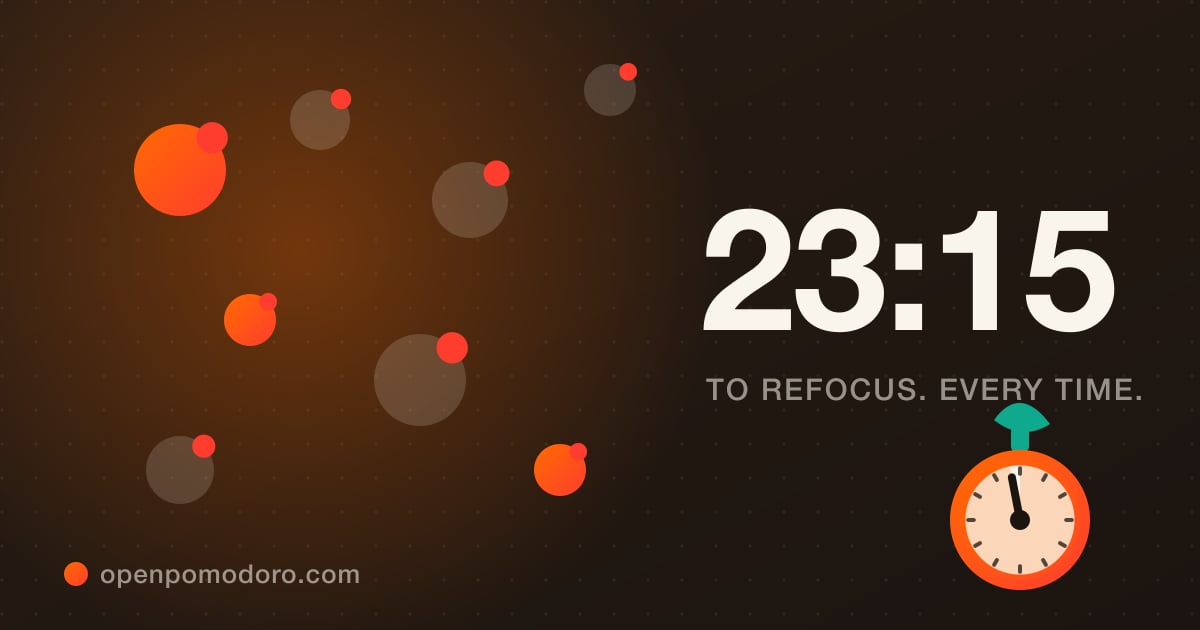
Why Can't You Focus? The Short AnswerWhat Does an Interruption Actually Cost?The Interruption Math That Kills Your DayIs Multitasking Making It Worse?Internal Interruptions: The Ones You CauseHow Do You Rebuild Focus? A 4-Step DefenseHow Long Until Focus Improves?Frequently Asked QuestionsStart Your First Protected Session NowYou can't focus because your workday is built around interruptions, not attention. Knowledge workers now face roughly 275 interruptions per day (Microsoft Work Trend Index, 2025), and research by Gloria Mark at UC Irvine shows each one takes an average of 23 minutes and 15 seconds to fully recover from. The math makes sustained focus statistically impossible by default.
Your focus isn't broken. Your environment is. That distinction matters, because willpower-based fixes fail against a problem that is fundamentally structural.
This post walks through the actual numbers behind your scattered attention, then builds a four-step defense you can start using today.
Key Takeaways
- It takes an average of 23 minutes and 15 seconds to fully return to a task after an interruption, according to Gloria Mark's research at UC Irvine.
- Knowledge workers face roughly 275 interruptions per day, about one every two minutes during core hours (Microsoft Work Trend Index, 2025).
- The average focused work session has shrunk to 13 minutes and 7 seconds, down 9 percent from 2023 (ActivTrak State of the Workplace, 2026).
- Switching tasks before finishing leaves "attention residue" that degrades performance on the next task (Sophie Leroy, 2009).
- Timed, protected work sessions rebuild focus systematically; you can start one right now with this free Pomodoro timer.

Why Can't You Focus? The Short Answer
You can't focus because the modern workday is engineered against attention. Microsoft's Work Trend Index (2025) counts roughly 275 interruptions per knowledge worker per day, about one every two minutes during core hours. Since each interruption takes around 23 minutes to fully recover from (Gloria Mark, UC Irvine), your environment, not your willpower, is the problem.
Think about what that means in practice. If interruptions arrive every two minutes and recovery takes 23 minutes, you never actually recover. You spend the entire day in a partially distracted state, working on the surface of tasks that deserve depth.
Most focus advice ignores this. It tells you to try harder, wake up earlier, or find your passion. None of that changes the interruption rate. What works is treating focus as a defended resource, which is exactly what structured methods like the Pomodoro Technique do. If you're new to it, start with our complete guide to how the Pomodoro Technique works.
The rest of this post shows you the evidence, then the fix.
What Does an Interruption Actually Cost?
An interruption costs far more than the seconds it takes. Gloria Mark's research at UC Irvine found it takes an average of 23 minutes and 15 seconds to fully return to a task after being interrupted. The figure comes from "The Cost of Interrupted Work: More Speed and Stress" (Mark et al., 2008), one of the most cited studies on workplace attention.
Why so long? Because interrupted people rarely return straight to the original task. They detour. A Slack ping leads to a reply, which leads to a related email, which leads to a calendar check. By the time you circle back, your mental model of the original work has partially collapsed and must be rebuilt.
There's a second finding in the same research program that gets far less airtime. People do compensate for interruptions by working faster. The work still gets done. But Mark's data shows that speed comes at a price: significantly more stress, frustration, and perceived effort.
So the interruption tax is paid twice. Once in recovery time, and again in how exhausted you feel at 5 p.m. despite having "done less" than you planned. If your workdays end with that specific brand of tired-but-unaccomplished feeling, this is likely why.
The Interruption Math That Kills Your Day
The numbers do not add up in your favor. Microsoft's Work Trend Index (2025) reports roughly 275 interruptions per day for knowledge workers, while ActivTrak's State of the Workplace (2026) puts the average focused session at just 13 minutes and 7 seconds, down 9 percent from 2023. Recovery takes 23 minutes. Sessions last 13. That gap is the trap.
Walk through it slowly. An eight-hour day contains 480 minutes. Spread 275 interruptions across your core working hours and you get one roughly every two minutes. Even if you ignore 90 percent of them, the remaining handful still land every 15 to 20 minutes.
Now overlay the recovery cost. Each interruption you engage with starts a 23-minute recovery clock. Before that clock finishes, the next interruption arrives and resets it. Full recovery becomes mathematically unreachable, like trying to fill a bathtub with the drain open.
The ActivTrak number confirms the effect from the other direction. A 13-minute average focus session isn't a discipline failure spread across millions of workers. It's the predictable output of an interruption-saturated system. And it's shrinking year over year, which means waiting for things to improve on their own is not a strategy.
Is Multitasking Making It Worse?
Yes, multitasking makes weak focus measurably worse. Sophie Leroy's 2009 research in Organizational Behavior and Human Decision Processes identified "attention residue": when you switch tasks before finishing one, part of your attention stays stuck on the previous task, and your performance on the new task drops. Every switch splits your mind in two.
Multitasking is really just rapid task switching. Your brain doesn't run tasks in parallel; it toggles between them, paying the residue tax at every toggle. The task you left behind keeps pulling at you, especially when it was unfinished and unresolved.
Leroy's work explains something the interruption research alone doesn't. Even after you physically return to a task, you're not fully there mentally. Some fraction of your cognitive capacity is still processing the email you half-read or the ticket you half-triaged.
Here's the practical upshot. Ten tasks touched simultaneously will almost always lose to ten tasks completed one at a time. Finishing, or at least reaching a deliberate stopping point, releases the residue. Abandoning mid-thought does not.
Internal Interruptions: The Ones You Cause
Not every interruption comes from the outside. Many focus breaks are self-inflicted: you check your phone, glance at email, or open a new browser tab without anyone asking you to. External noise gets the blame, but the habit of interrupting yourself is often the harder and more important problem to fix.
Self-interruption is sneaky because it feels like a choice rather than a disruption. Reaching for your phone during a hard paragraph doesn't register as an interruption. It registers as a tiny, deserved break. Yet the recovery cost is the same, and the trigger is usually discomfort, not necessity. The moment work gets cognitively difficult, the brain proposes an easier alternative. That reflex is procrastination in miniature — here's why you procrastinate and what actually stops it.
In my own two-day interruption audit, I expected meetings and messages to dominate the tally. They didn't. Slightly over half of my logged focus breaks were self-initiated, mostly reflexive phone checks and "quick" tab switches that had no external cause at all.
The good news is that internal interruptions are the ones most within your control. You can't silence a whole office, but you can move your phone to another room. The defense plan below handles both kinds.
How Do You Rebuild Focus? A 4-Step Defense
You rebuild focus by defending time, not by trying harder. The Pomodoro Technique, created by Francesco Cirillo in the late 1980s, structures work into 25-minute protected sessions with 5-minute breaks and a longer break every four sessions. Combined with an interruption audit, time blocking, and a capture list, it turns focus into a repeatable system.

Step 1: Audit Your Interruptions for Two Days
Track every focus break for two working days. Keep a simple tally with three columns: what interrupted you, whether it was external or self-inflicted, and whether it actually needed a response within the hour.
Don't change anything yet. Just measure. Most people discover that a large share of their interruptions are self-initiated and that very few of the external ones were genuinely urgent. That data tells you exactly where your defense should concentrate.
Step 2: Create Protected Windows With Time Blocking
Reserve two to three blocks of 60 to 90 minutes on your calendar for focused work, placed where your audit shows the fewest external demands. Treat these blocks like meetings with your most important stakeholder, because that's what they are.
During a protected window, notifications go off, chat status goes to "focusing," and your phone leaves the desk. Pairing calendar blocks with timed sessions works especially well; our guide to combining the Pomodoro Technique with time blocking shows the full setup.
Step 3: Run Timed Sessions Inside Each Window
Fill each protected window with Pomodoro sessions: 25 minutes of single-task work, then a 5-minute break, with a longer break after four rounds. The standard structure matters because the timer externalizes discipline. You're not resisting distraction for a vague "while," only until the bell.
Twenty-five minutes is also a realistic target. If your current average session is around 13 minutes, one Pomodoro nearly doubles it without demanding heroics. Once the standard rhythm feels comfortable, you can experiment with longer intervals using our guide to Pomodoro interval variations.
Step 4: Park Distractions on a Capture List
Keep a notepad beside you during every session. When an off-task thought appears, an email you should send, a thing you must Google, a snack you suddenly need, write it down in five words and return to work. The urge is honored, just deferred.
Capture lists neutralize attention residue by giving the intruding thought a safe home. Skipping this step is one of the most common Pomodoro mistakes, and it's usually why timed sessions fail on the first attempt. Process the list during breaks, not mid-session.
How Long Until Focus Improves?
Expect real improvement within a week or two of consistent practice, not an overnight transformation. No credible research promises a universal timeline for rebuilding attention, so distrust anyone selling instant results. What the evidence does support is immediate: every interruption you prevent saves you its 23-minute recovery cost starting today.
Progress tends to arrive in a predictable order. First, sessions stop feeling impossible, even if they're still uncomfortable. Next, your capture list shrinks as the reflex to self-interrupt weakens. Eventually, 25 minutes starts to feel short, which is your cue to consider longer intervals.
I'd suggest tracking one metric only: completed sessions per day. When I coach people through this, the ones who count sessions stick with it, and the ones who chase a vague feeling of "being focused" quit within days. A number you can see beats a mood you can't.
Setbacks are part of the deal. A chaotic Tuesday full of meetings doesn't erase your progress. The system resumes the next morning at session one.
Frequently Asked Questions
Why can't I focus even when I genuinely want to work?
Because motivation doesn't change the interruption math. With roughly 275 interruptions per day (Microsoft Work Trend Index, 2025) and a 23-minute recovery cost per interruption (Gloria Mark, UC Irvine), wanting to focus isn't enough. Focus improves when the environment changes: silenced notifications, calendar-protected windows, and timed single-task sessions.
How long does it take to refocus after an interruption?
About 23 minutes and 15 seconds on average, according to Gloria Mark's research at UC Irvine. The delay is long because interrupted workers rarely return directly to the original task; they detour through other work first, and the mental context must then be rebuilt. This is why a "quick question" is never actually quick.
Is the Pomodoro Technique good for people who struggle to focus?
Yes, and it arguably helps strugglers most. The technique asks for just 25 minutes of protected attention at a time, a realistic step up from today's 13-minute average session (ActivTrak, 2026). The timer removes the need for constant self-discipline: you only defend your attention until the bell rings, then you get a guaranteed break.
Does multitasking really hurt performance?
Yes. Sophie Leroy's 2009 study identified "attention residue": switching tasks before finishing leaves part of your attention on the old task and measurably degrades performance on the new one. Since multitasking is really rapid task switching, every toggle pays that residue tax. Working on one task per timed session avoids the cost entirely.
What if my job requires me to stay reachable?
Protect small windows instead of whole days. Two 25-minute sessions with notifications paused fit almost any "always reachable" role, and colleagues rarely notice a delay that short. Batch replies into the gaps between sessions. Makers with heavy collaboration loads can find role-specific tactics in our guide to the Pomodoro Technique for developers.
How do I stop interrupting myself?
Make self-interruption harder and capture the urge instead of acting on it. Put your phone in another room, close unneeded tabs before each session, and keep a notepad for stray thoughts. Writing the urge down satisfies it without a task switch. Most people find the reflex weakens noticeably after a week of practice.
Start Your First Protected Session Now
Reading about focus changes nothing. One completed session changes the math: 25 minutes without interruption saves you at least one 23-minute recovery cost and proves the system works with your own attention, today.
Here's the whole assignment. Pick one meaningful task. Move your phone out of reach, put a notepad beside you, and start the free Pomodoro timer at Open Pomodoro. Work on that single task until the bell, parking every stray thought on paper. Then take your five minutes.
That's it. Not a productivity overhaul, just one defended block of attention. Run it now, count it, and let the second session argue for itself tomorrow.
Put this article into practice
Run your next focus session with our free online Pomodoro timer. No signup, fully adjustable intervals, works right in your browser.