On this page
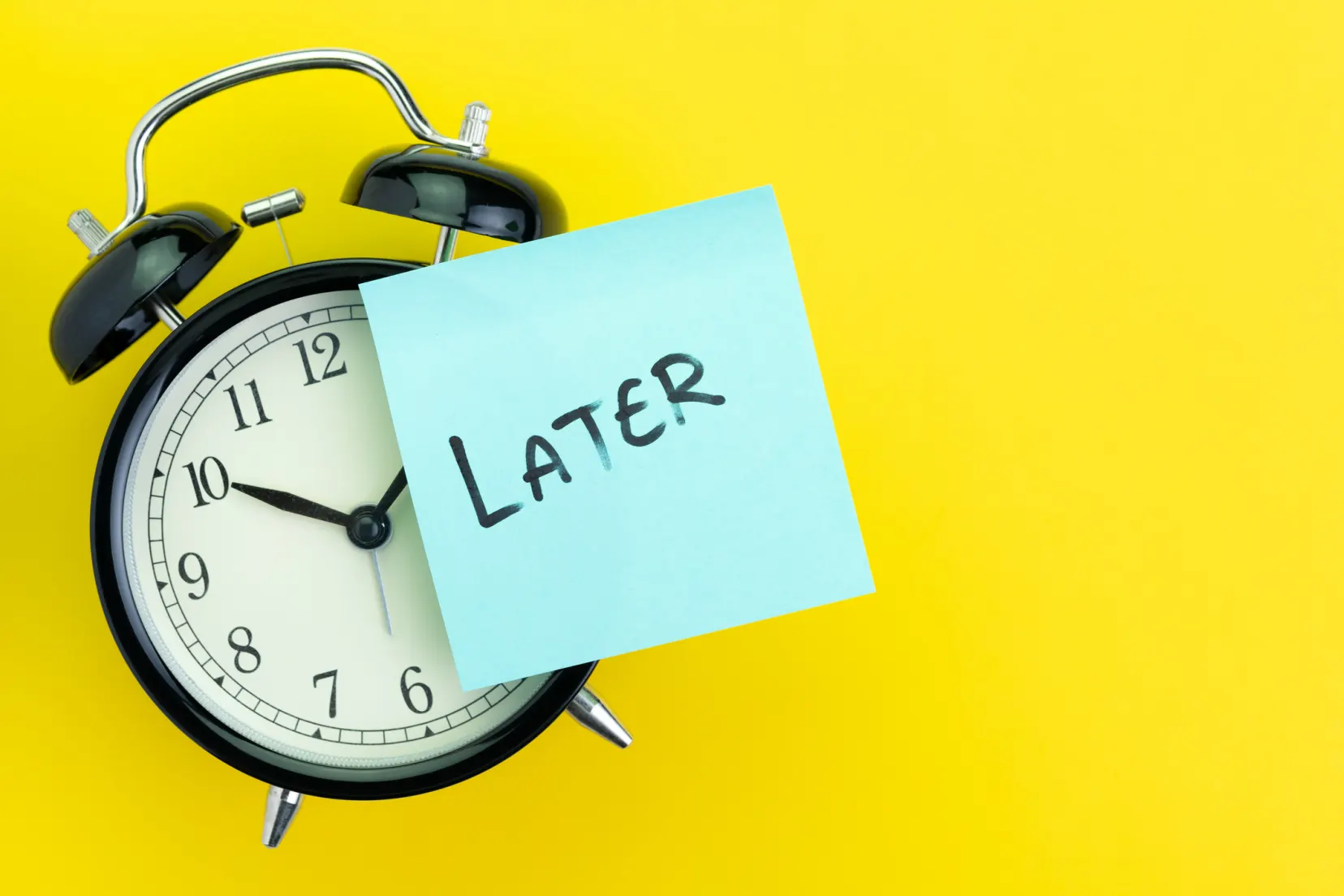
Why Do You Procrastinate? The Real AnswerWhat Happens in Your Brain When You Avoid a Task?Is Procrastination Getting Worse?Why Does "Just Do It" Advice Fail?How to Actually Start: Shrink the Emotional CostThe Pomodoro Technique as an Anti-Procrastination ToolDo Some People Really Work Better Under Pressure?Frequently Asked QuestionsStart One Ten-Minute Session Right NowThe deadline is tomorrow. You've known about it for two weeks. And right now you're color-coding your desktop folders with the concentration of a bomb-disposal expert. Here's the honest answer to why: you procrastinate because the task feels bad, and avoiding it feels better right now. It's emotion regulation, not laziness, and not a time-management failure.
That distinction changes everything. If procrastination were a scheduling problem, calendars would have cured it decades ago. It survives every planner, app, and productivity system because it isn't about time at all. It's about escaping a feeling.
This post walks through what the research actually says about why you delay, what the avoidance loop does inside your head, and how to start working in the next ten minutes, even when every cell in your body wants to check your phone instead.
Key Takeaways
- Procrastination is an emotion-regulation problem, not a time-management problem, according to psychologist Tim Pychyl at Carleton University.
- Roughly 15 to 20 percent of adults are chronic procrastinators, and most college students report procrastinating regularly (Piers Steel, 2007).
- Avoidance brings instant relief, and that relief rewards your brain for avoiding again next time.
- Harsh self-criticism after a delay makes the next delay more likely; Fuschia Sirois's research links self-compassion with lower procrastination and lower stress.
- An external timer beats internal negotiation. Start a single session with this free Pomodoro timer and let the clock decide, not your mood.
Why Do You Procrastinate? The Real Answer
You procrastinate to escape a feeling, not to manage time badly. Tim Pychyl, a psychologist at Carleton University, has spent decades showing that procrastination is an emotion-regulation problem: you avoid a task to repair your mood in the short term, and you pay for that relief later. Laziness has nothing to do with it.
Think about the last thing you put off. It probably wasn't hard in any technical sense. It was an email with an awkward apology in it, a report you might do badly, a form so boring it made your eyes slide off the screen. The common thread isn't difficulty. It's discomfort.
Researchers call this quality task aversiveness, and it shows up everywhere in the data. Piers Steel's 2007 meta-analysis in Psychological Bulletin, covering hundreds of studies, found that procrastination correlates strongly with two things: how aversive the task feels and how impulsive the person is. Unpleasant task plus a brain wired for quick relief equals delay.
You don't procrastinate because you're lazy. You procrastinate because the task feels bad, and your brain is very good at making bad feelings go away.
Notice what's missing from that equation: character. Lazy people don't reorganize their entire kitchen to avoid a five-line email. That's effort. It's just effort pointed away from the thing that hurts. If your delays are more about scattered attention than dread, our guide on why you can't focus covers that separate problem.
What Happens in Your Brain When You Avoid a Task?
When you avoid a task, your brain runs a short, powerful loop: the task triggers discomfort, avoidance removes the discomfort, and the relief acts as a reward. That reward teaches your brain to avoid again next time. Sophie Leroy's 2009 research adds a twist: the avoided task doesn't actually leave your head.
Start with the trigger. Your threat system works like a smoke alarm. A smoke alarm can't tell the difference between a house fire and burnt toast; it just shrieks. To that alarm, a tax return, a blank page, and a genuine threat all produce the same instruction: get away from this. So you do. You open a new tab, and the shrieking stops.
That silence is the trap. Relief is one of the most effective teachers your brain has, and every avoidance delivers it instantly and reliably. The task itself pays off slowly, sometimes weeks later. Guess which one wins the wiring contest.
Every time avoidance brings relief, your brain takes notes.
Here's the cruel part: you don't even get clean relief. Leroy's work on attention residue (2009) shows that when you switch away from an unfinished task, part of your attention stays stuck on it. The tax return follows you into the scrolling. And once you're interrupted or distracted, coming back is expensive. Gloria Mark's research at UC Irvine found it takes about 23 minutes and 15 seconds to fully refocus after an interruption (The Cost of Interrupted Work, Mark et al., 2008).
So the loop leaves you with the worst of both worlds. The work isn't done, and the escape wasn't even enjoyable. That low-grade hum of guilt behind your entertainment? Attention residue with a deadline attached.
Is Procrastination Getting Worse?
Chronic procrastination is common and sticky. Piers Steel's 2007 meta-analysis found that roughly 15 to 20 percent of adults are chronic procrastinators, and that the majority of college students report procrastinating regularly. Whether the underlying trait is rising is hard to prove. What has clearly changed is how easy escaping has become.
Consider what avoidance cost thirty years ago. You had to stand up, walk to a television, and watch whatever happened to be on. Escape had friction. Distraction required a small commitment, and that commitment gave you a moment to reconsider.
Now the escape hatch sits in your pocket, engineered by some of the smartest people alive to be frictionless. One thumb-flick separates you from an infinite feed calibrated to your exact tastes. Remember the loop from the last section: discomfort, avoidance, relief, repeat. Smartphones didn't create that loop. They shortened it to under a second.
Avoidance used to require effort. Now it lives in your pocket.
That matters because of the impulsiveness finding in Steel's data. Impulsiveness is essentially sensitivity to whatever reward is closest. When the closest reward moves from "across the room" to "already in your hand," the same brain procrastinates more, without becoming any weaker or lazier than it was before.
Why Does "Just Do It" Advice Fail?
"Just do it" fails because it aims at the wrong target. Willpower advice treats procrastination as a discipline shortage, but the evidence points to emotion, not effort. Steel's 2007 analysis tied procrastination to impulsiveness and task aversiveness. In plain terms, the worse a task feels, the faster you flee it, willpower speeches included.
Telling a procrastinator to try harder is like telling someone with a fear of flying to simply enjoy the turbulence. The instruction isn't wrong, exactly. It's useless, because it doesn't touch the mechanism producing the behavior.
Worse, the willpower framing adds shame to the pile. You delayed, so you must be weak, so you feel worse about yourself, so the task now carries the original dread plus a layer of self-disgust. Fuschia Sirois's research shows procrastination is linked to higher stress and worse well-being over time. The mood repair is temporary; the cost compounds. Shame accelerates that compounding by making the task even more aversive than it started.
Shame is fuel for the loop, not a way out of it.
There's a testable prediction hiding in all this. If procrastination is an emotion problem, then reducing the emotional cost of starting should work better than increasing the pressure to finish. That's exactly what the next section is about.
How to Actually Start: Shrink the Emotional Cost
You stop procrastinating by shrinking the emotional cost of starting, not by inflating the pressure to finish. Make the first step so small that dread can't get a grip: one timed session, ten minutes, one ugly sentence. Small starts work because they change how the task feels, which is the actual problem.
Here are four moves that target the feeling directly.
Sign the one-session contract
Don't agree to write the report. Agree to sit with the report for one timed session, after which you're free to stop, guilt included. Your brain resists "finish this project" because it's huge and vague. It can't put up much of a fight against "25 minutes, then we'll see." Pychyl's research points to a bonus: the dread usually peaks before you start, so getting started is itself the mood repair.
Try the ten-minute version
If 25 minutes still triggers the alarm, drop to ten. Ten minutes is small enough to feel almost silly, which is the point. A task that feels silly can't also feel threatening. Most of the time you'll keep going past the timer. Sometimes you won't, and that's fine too. You still taught your brain that starting didn't hurt.
Make the first step stupid-small
"Write the essay" is a boulder. "Open the document and type one bad sentence" is a pebble. Define the entry point so small that doing it is easier than negotiating about it. Students tend to see the fastest wins here, and our guide to the Pomodoro Technique for studying breaks the approach down session by session.
Forgive yourself for the last delay
This one sounds soft and performs like steel. Sirois's work on self-compassion suggests that people who respond to their own procrastination with understanding, rather than contempt, procrastinate less afterward. The logic follows from everything above: self-criticism raises the emotional temperature of the task, and emotional temperature is exactly what drives avoidance. Dropping the whip isn't indulgence. It's mechanics.
You don't need to feel ready. You need the first step to be smaller than your dread.
The Pomodoro Technique as an Anti-Procrastination Tool
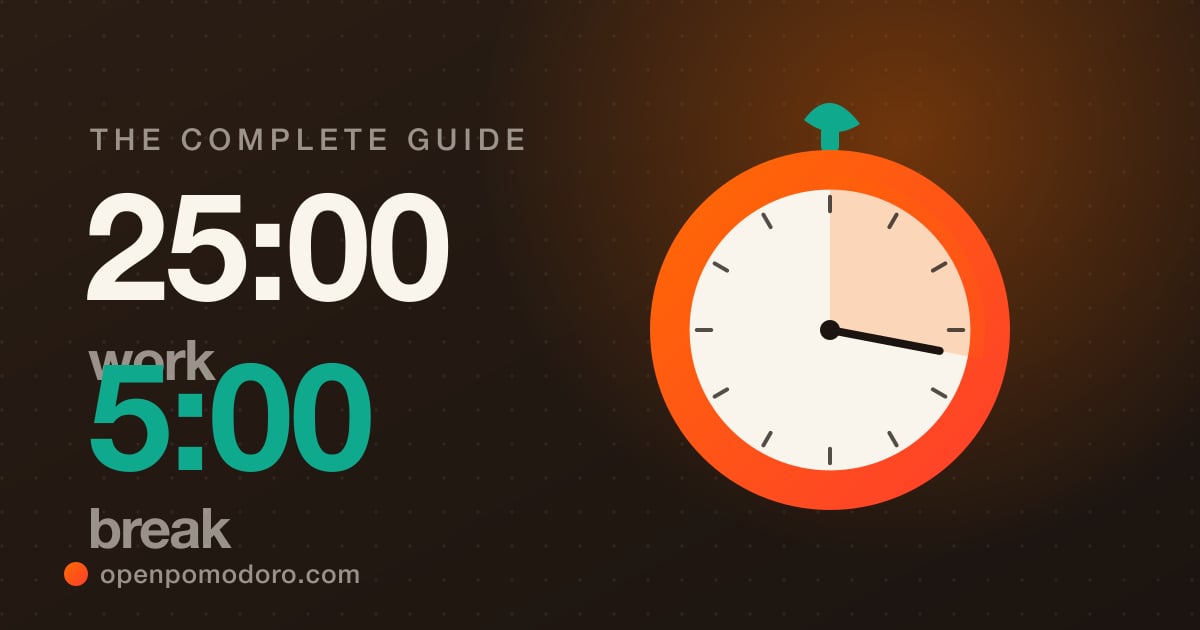
The Pomodoro Technique, created by Francesco Cirillo in the late 1980s, works against procrastination because it replaces internal negotiation with an external contract: 25 minutes of focused work, then a 5-minute break. The timer decides when you start and stop, so your mood doesn't get a vote.
Internal negotiation is where procrastination lives. "I'll start after this video." "I work better at night anyway." "Five more minutes." Every one of those bargains is your brain buying relief on credit. A running timer ends the auction. The question is no longer "do I feel like working?" but "is the timer running?" One of those questions has a debatable answer. The other doesn't.
A timer can't be argued with, and that's exactly the point.
Notice how neatly the method maps onto the psychology in this post. The 25-minute cap is the one-session contract, pre-signed. The guaranteed break tells your smoke alarm that escape is coming, so it quiets down. And Cirillo's method has stayed essentially unchanged since a university student first wound up a tomato-shaped kitchen timer, which says something about how well the core loop fits human wiring.
If you're new to the method, start with our complete guide to how the Pomodoro Technique works. And if you've tried it before and it fell apart, the culprit is usually one of a few common Pomodoro mistakes, like treating the break as optional or setting a vague goal for the session.
Do Some People Really Work Better Under Pressure?
Mostly, no. Deadline pressure makes you start, not improve. What people call "working better under pressure" is usually working at all under pressure: the fear of missing the deadline finally outweighs the discomfort of the task. Sirois's research shows the cost of relying on that trigger is higher stress and worse well-being over time.
The myth survives because of selective memory. You remember the all-nighter that turned out fine. You forget the one where you submitted something you were quietly ashamed of, or got sick the week after, or swore never again while doing it again a month later.
There's also a simpler problem with deadline adrenaline: it removes your options. Work done in the final hours can't be revised, slept on, or rescued when your laptop dies at 2 a.m. Whatever quality you produce in that window is the quality you're stuck with. Panic is a decent ignition system and a terrible editor.
Deadline adrenaline doesn't make you better. It just makes fear louder than dread.
I'll admit the pull of it, though. I've felt that strange all-nighter clarity too, and it's genuinely seductive. The honest reframe: if you only focus when a deadline screams at you, you don't have a superpower. You have a starting problem, and starting problems have gentler solutions than fear.
Frequently Asked Questions
Is procrastination a sign of laziness or a character flaw?
Neither. Research by Tim Pychyl frames procrastination as an emotion-regulation strategy: you avoid a task to escape the bad feeling it creates. Piers Steel's 2007 meta-analysis ties it to impulsiveness and task aversiveness, not to low effort or weak character. Plenty of hardworking, ambitious people procrastinate heavily, usually on the exact tasks that matter most to them.
Why do I procrastinate even on things I enjoy?
Because the aversive part isn't the activity, it's a feeling wrapped around it. A hobby can carry fear of doing it badly, pressure to make it "count," or the weight of your own expectations. Your smoke alarm responds to that emotional load, not to whether the task is technically fun. Shrinking the first step works on passion projects exactly the way it works on tax returns.
Is procrastination connected to ADHD?
They overlap. Steel's 2007 analysis found impulsiveness is one of the strongest correlates of procrastination, and impulsivity is a core feature of ADHD, so people with ADHD often fight a harder version of the same battle. Standard advice usually needs adapting. Our guide to the Pomodoro Technique for ADHD covers adjustments like shorter intervals and stronger external cues.
Does the Pomodoro Technique actually stop procrastination?
It targets the hardest part: starting. The 25/5 structure Francesco Cirillo designed turns a threatening project into one small, pre-agreed session with a guaranteed exit, which lowers the emotional cost that drives avoidance in the first place. It won't rewire you overnight, and it works best when the first pomodoro of the day is treated as the only one that matters.
I feel guilty after procrastinating. Does the guilt at least help?
The evidence says it backfires. Fuschia Sirois's research links procrastination to higher stress and worse well-being over time, and harsh self-criticism feeds that cycle by making the avoided task feel even worse. Self-compassion is associated with lower procrastination, not more of it. Treat the last delay as data about the task's emotional cost, then shrink the next first step.
How long does it take to stop procrastinating for good?
Be suspicious of anyone selling a number. Procrastination is a learned emotional habit, and habits fade with repetition, not declarations. A more useful goal than "never procrastinate again" is "shorten the delay between dread and starting." Each timed session where starting turned out to be painless is one more piece of evidence your brain can't ignore.
Start One Ten-Minute Session Right Now
You now know the mechanism: the task feels bad, avoidance feels good, and relief trains the habit. Which means the counter-move is equally clear. Don't wait for motivation, and don't schedule a heroic session for tomorrow morning. Shrink the step until dread can't grip it, and let a timer make the decision for you.
So here's the whole assignment. Pick the task you've been circling. Open the free Pomodoro timer, set it for ten minutes, and press start before your brain can open negotiations. Not after this paragraph settles in, not after one quick scroll. Now.
Ten minutes from today's dread is a smaller step than you think, and it's the only one the research says you need to take first.
Put this article into practice
Run your next focus session with our free online Pomodoro timer. No signup, fully adjustable intervals, works right in your browser.